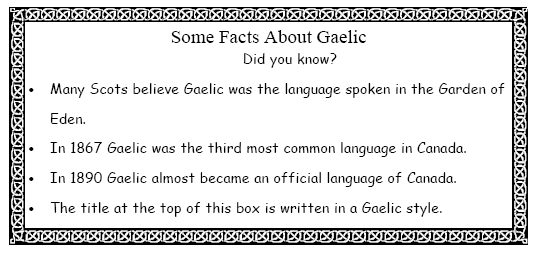
In 1900, there were about 75,000 people on the island who spoke Gaelic. That number soon fell sharply. By 1931, there were only 24,000 Gaelic speakers in Cape Breton. By 1971, there were only 1,500. Today, there are fewer than 800.
There are many reasons why the number of Gaelic speakers fell. Some schools punished children who spoke Gaelic. Teachers thought it was backward. Many parents wanted their children to speak English because that would help them blend into the larger English-speaking community. That would help them be successful. Many young men stopped speaking Gaelic when they went off to war or left the island for jobs.
However, Gaelic is a beautiful, musical language that many people now respect. Am Braighe is a newspaper from Mabou, Inverness County, that is written partly in Gaelic. More than 2,000 people all over the world receive the newspaper. Fortunately, on Cape Breton Island we can still hear Gaelic in songs and in place names and popular sayings. Have you ever been to a ceilidh (pronounced KAY-lee)? That’s a house party where people provide their own entertainment with music, stories and dance. Have you heard the greeting “Ciad mile failte!” (pronounced (Kayet mealya Fallcha)? It means “One hundred thousand welcomes!”