|
When Canada became a country in 1867, the federal government was given the power to raise money through taxes. However, it was another fifty years before Canadians had to pay income tax. Before 1917, when income tax was first brought in, the government did raise money through taxes, but these were indirect taxes. They were indirect because nobody paid money directly to the government. Instead they paid indirectly through such things as sales taxes and customs duties. The provinces got some money from the federal government, but they also raised their own money through fees, licenses and rents. To raise still more money, they put taxes on horses, dogs, cars, gasoline, salmon, canaries, foxes, circuses, and bowing alleys. That's quite a list of taxable items! |
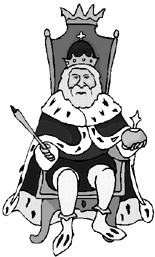 People have paid taxes -- usually
unwillingly -- for thousands of years. In Canada, our first recorded tax was
collected in 1650. The early taxes were usually customs duties. This was money
that was paid on goods that were imported or exported. The King of France
charged Canada's first tax -- a tax on the skins of beaver and moose that were
sent back to Europe. The money raised by this tax went to the French
government. Later, the English brought in similar customs duties, and this
money, naturally, went back to England.
People have paid taxes -- usually
unwillingly -- for thousands of years. In Canada, our first recorded tax was
collected in 1650. The early taxes were usually customs duties. This was money
that was paid on goods that were imported or exported. The King of France
charged Canada's first tax -- a tax on the skins of beaver and moose that were
sent back to Europe. The money raised by this tax went to the French
government. Later, the English brought in similar customs duties, and this
money, naturally, went back to England.| Previous Page | Table of Contents | Next Page |