|
The example below
illustrates a well-specified operation. The respondent is asked to enter a
number and subtract it from a given amount. The operation is indicated by the
word ‘minus’ and by the subtraction and equal signs. Lines are
provided for the number to be entered and for the resulting number. Both
numbers appear in the same column and are adjacent. 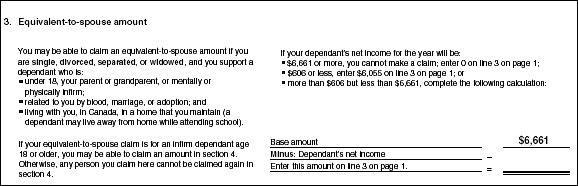
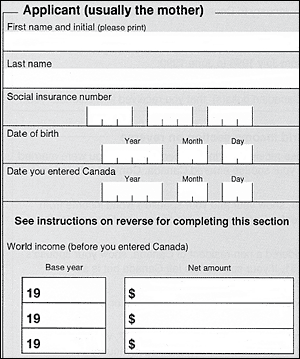
A poorly specified
operation can be illustrated using the section of the application for the Child
Tax Benefit shown below. The respondent is asked to enter ‘world
income’ for three years. We will ignore the fact that collecting
income amounts for three years will involve some addition. The operation that
will be most difficult will be to show this combined income ‘in
Canadian dollars.’
No assistance is
given to the respondent about how to perform this conversion or where to find
the conversion factors. It is also unclear if the money is to be converted into
today’s dollars, or reported as dollars at the time the money was
made—perhaps a considerable difference. The numbers to be operated upon
are not adjacent, the operation to be performed (multiplication) is not
indicated in words or by mathematical signs. Despite a ‘definitions’
section on the back of the form (shown on the page following), ‘net
amount’ is not described or specified; one assumes it indicates
‘after tax’ income. |

