|
The following figure illustrates the four factors of reading ease that correspond to reading ability, prior knowledge, motivation, and interest of the reader: 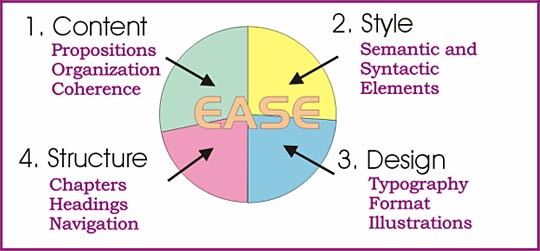
While the ability to handle words and sentences determines the reading ability of readers, their prior knowledge determines their interest and motivation. If the content does not appeal to the interest or motivation of the readers, they most likely will not read it, no matter how easy it is to read. On the other hand, if they are highly interested or motivated, they will find some way to master the text, no matter how difficult it is for them. In appealing to the readers' interest, first impressions are very important. Use visual features such as the layout, pictures, sidebars, graphs, and captions to draw them into reading the text. It is in the organization of the content that we sustain their interest and lead them from one item to the next. People learn in the terms of what they already know. Use connective terms such as "while," "although," "however," and "not only…but also" to make those relationships clear. Poor readers especially need connectives and clear visual markers such as chapter headings, subheadings, and paragraphs to make obvious the internal structure of the text. The final judges, of course, of a document's reading ease, are the readers themselves. Take whatever measures you can to test a document on sample members of your audience before publication. Attention to the reading skills, interest, motivation, and prior knowledge of readers goes a long way in creating texts that are considerate and easy to read. |
 |
||
| Previous page | Cover | Speaker profile |