|
When Barbara Pym, barely twenty-one, came from Oxford in the summer of 1934, she had received a thorough grounding in English literature, but also in the experience of unrequited love, for a fellow undergraduate, an egotistical young man whom she romantically nick-named Lorenzo. In unromantic reality he was Henry Harvey - fickle, petulant and spoiled. Separated from this unworthy object of her affections, Pym turned to fiction-writing for solace, producing her hilarious roman à clef, Some Tame Gazelle, in which she imagined herself, her sister and their friends all thirty years in the future: Henry became the blissfully complacent Archdeacon Henry Hoccleve tyrannizing over a wife named Agatha, and patiently adored by his parishioner Barbara/Belinda who is now glad they never married. While this novel made the rounds of publishers (ultimately it became her first published novel, but not until 1950), Pym launched into Civil to Strangers, a fresh re-imaging of her future, this time in the role of Henry's wife. Cassandra Marsh-Gibbon at twenty-eight has been married for five years to a Miltonically domineering mate named Adam, a writer who has laid aside his , novel and is "contemplating an epic poem." The marriage which seems threatened by his cool selfishness, separate vacations (Adam gives himself a week in the Bodleian for his) and the absence of children, is in the course of the novel , restored by Adam's reluctant discovery that he has a rival, by a "second honeymoon" in Budapest, and the news of a "little Adam" to come. Wish-fulfillment indeed! 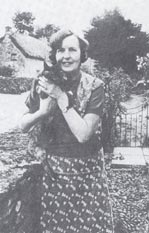
Though this novel comes from Pym's apprenticeship in fiction and may be partly directed, as the editor admits, to Pym enthusiasts and specialists who have read everything else available, it includes ample evidence of the particular pleasures intrinsic to her work and may well serve to create new admirers. As in the later novels, she provides a cast of mildly dotty characters in an enclosed setting- this time the village of Up Callow - and a sharply observant consciousness in Cassandra that misses no foible in herself or in others. Literary allusions, more or less obscure, abound (the title is taken from Pomfret's 1700 poem The Choice) and so do scenes of high comedy such as that of the rector's sermon in which he unadvised attempts to introduce the metaphor of life as embroidery: "'Some people don't put in enough stitches,' repeated the rector, in a slow, emphatic voice. 'Isn't that true of many of us?'” Civil to Strangers is a complete and, so far as one can tell, even, polished text, which is not true of the next three works, all of which the editor found "in a fairly 'raw' state" and which she says she has "reduced... in Barbara's favorite culinary sense of the word" to their present forty of fifty page length. What this means in bibliographical terms, rather than culinary , is far from clear. The first of these, which Pym called "my Finnish novel" and is here titled Gervase and Flora, is of interest mainly as testimony to the sad continuance of her obsession with Henry Harvey in 1937 and 1938, even after he had gone to teach in Finland and married Else Godenhjelm there. Finally, it seems Pym steeled herself to write a closing scene of parting, complete with the escaping lover's protestation "We can always be friends." The other two fragments, or reductions, of novels both date from the early years of the war and echo many of her diary entries of the time, reflecting as they do such activities as practicing bandaging, coping with evacuee children, and placating housemaids who have begun "talking about munitions factories in a very sinister way." 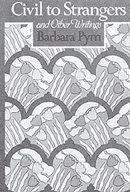
The Pym papers include twenty-seven short stories, very few of which were ever published. Here we have a glimpse of two early ones which were rejected (one with characters plundered from the abandoned Crampton Hodnet), and two which, in the brief heyday of her rediscovery, were actually commissioned, by the Church Times and The New Yorker. What other fiction writer could possibly have been so honored by those two periodicals at once? The New Yorker story, "Across a Crowded Room," is heavily autobiographical, featuring an unnamed woman at an Oxford ceremonial dinner, sentimentally dreaming of an encounter with - yes, "Gervase" - but rational enough to dismiss the idea as "too much like a romantic novel" and to finish the thought with the tart observation that nowadays "fiction... tended to be rather more realistic than life." The story leads smoothly into Pym 's all-too-short and modest radio talk surveying her own life in fiction, with its definition of "the kind of immortality most authors would want - to feel that their work would be immediately recognizable as having been written by them and by nobody else." This immortality she achieved long ago; Civil to Strangers and Other Writings should make many more readers aware of it. |
| Back | Contents | Next |