|
Ergonomics Moderator: Panelists: Françoise Poirier, Ergonomist, The object of ergonomics is the study of humans performing tasks. Francoise Poirier presented an overview of job analysis in the light of three factors, fundamental to any occupation:
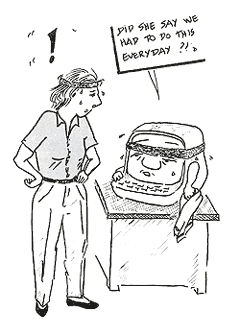
Applied to a workplace in which microprocessors are widely used, ergonomics raises fundamental questions about the conditions and consequences of the operator/screen interface on the one hand, and the autonomy of workers on the other. Ruth Heron reported on a study in which measurements of mental, physical and visual load were obtained for operators of various types of video display terminals (VDTs), and for a group of office workers not using the VDT. These measurements were supplemented with follow-up observational procedures. Results suggested that: 1) for VDT operators, symptoms of load will be manifested mainly among those carrying out dull, repetitive tasks on a full-time basis; and 2) use of the VDT apparatus is associated with ergonomic problems, which compound the stressful effects of continuous routine work. It was argued that, as women are mainly employed in such jobs, these findings pertain primarily to them. It was also suggested that the ergonomic problems related to full-time VDT operation would be maximally reduced only through new approaches to job design. Relevant criteria were discussed.
 |
| Back | Contents | Next |