1. Introduction * Before listening to the song, ask learners, "What's a lament?" * Tell the learners this is a song about a boss's or supervisor's problem. Ask them to think of what problems a boss could have, working, perhaps, with these prompts:
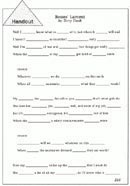
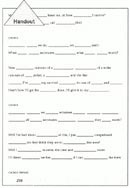
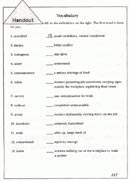
* Encourage learners to talk about bosses for whom they have worked. If learners have had little direct paid work experience, you might ask them to think about what the word 'boss' conjures for them. * After the discussion, play the song once and then give learners the cloze exercise (page134) and ask them to fill in the missing words, playing the song as many times as is needed or until learners are ready to assist one another in completing the cloze. * Once everyone has completed the sheet, take the time to go over any needed vocabulary work, using the matching exercise (page 135).
2. Guided discussion * Ask learners to respond to the song in pairs or small groups. Some questions to consider:
Learners may be interested in doing some research about unions. The focus of this song is on unions and organizing, but many people have difficulty understanding the differences between a union and non-union shop and/or may be uncomfortable with some of these issues. If this is the case, you may choose to focus on women's rights (and lack of rights) in the workplace. 3. Vocabulary review * Both EAL and literacy learners might benefit from a review of the many idioms used in the song, as well as particular terms referring to labour issues:
4. Further discussion * Ask learners to talk about work that is traditionally thought of as "women's work." Make a list of the jobs they suggest and ask them to discuss the qualifications needed to do such work. For example:
* You may then ask learners to talk about the differences between doctors and nurses, secretaries and the people for whom they work, teachers and principals, etc. It's likely that learners will come to the realization that many of these "support" jobs require many of the same skills and abilities as those required in more "male" jobs. The song points out the fact that secretaries need to know almost (if not) as much as bosses in order to keep an office and a business running smoothly If there is interest, ask students to research the salary ranges of the positions they've listed as well as the salary ranges for other work (nurses/doctors, secretaries/the administrators they work for, teachers/principals, domestic workers, childcare workers, etc.). |
| Back | Contents | Next |