|
E. Theme: Women's Work
1. Reading: Several poems
* Spend 15-30 minutes introducing, reading and discussing each
of the following poems and their authors; all of the poems are from Tom
Wayman's anthology of working poems, Going for Coffee, Poetry on the
Job.
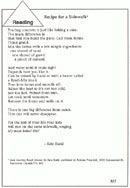
- "Recipe for a Sidewalk" by Kate
Braid
- "Picking Tomatoes" by Janet Gibson
- "Felton's Fragrances" by Gwen Hauser. (Discuss the word
irony and how the poem is ironic. Find all the details in the poem that help
build up the irony.)
- "Where Things Come From" by Gwen Hauser. (Ask students to
volunteer to take the roles of the policeman, the girl selling the flowers and
the narrator. The parts can be acted out, as well as read, to add to the drama.
This is a great deal of fun and guaranteed to bring the poem to life. You could
also do a mini-lesson on the use of quotation marks using the same poem.)
- "The Two Policemen" by Gwen Hauser
- "The Housewife's Poem" by Bronwen Wallace
|
* * * * * * * * * * * * * * * *
There are more
poems in the chapter "Women and Work." Tom Wayman has also edited other, more
recent, anthologies of work poems.
* * * * * * * * * * * * * * * *
The students
should write the individual letters but the content and format can be decided
by the group. Writing real letters is an excellent means of improving practical
writing skills.
|
|
2. Panel discussion
* Brainstorm as a group to identify a number of women in your
community who do different types of work. Decide upon five or six of them to
take part in a panel discussion about women's work.
* Prepare a short list of questions to ask the panel.
*
Write letters of invitation to the selected women, including the list of
questions with the letter.
* Hold an informal panel discussion.
* Send
letters of appreciation to the guests.
F. Theme: Women's Bodies
1. Reading: Several poems
* Present the following poems:
- "Fashion Kills" by Helen Potrebenko (from Walking
Slow)
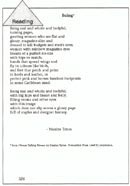
- "Being" by Maxine Tynes
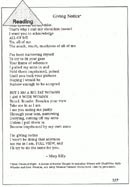
- "Giving Notice" by Mary Billy
* Discuss anorexia and bulimia. Why are these women's
diseases?
* As a group, brainstorm examples of societal pressures that
push women to be thin and beautiful. Think of television commercials and
advertisements in magazines. If you have done collages on images of women, look
at them again.
2. Writing
|
* * * * * * * * * * * * * * * *
You might ask
students to do either one of the last two activities, or to do both.
|
|
* Ask everyone to write five or more positive statements about
their own bodies in their journals or on paper.
* Prepare sheets of paper by writing the name of one student at
the top of each sheet. Pass the sheets from student to student, and ask
everyone to write one positive statement about each person as the appropriate
sheet comes to them. Give each sheet back to the student whose name appears at
the top. |