|
C. Learning from Roseanne and Oprah 1. Guided discussion * Some questions to consider:
2. A television survey
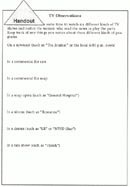
* Give learners the TV survey form. 3. Additional activities * Observe and discuss the presentation of women's bodies and ideas about fitness as portrayed in sports broadcasts and fitness programs. * Observe and discuss the issues of women's health and diseases as portrayed in medical reporting and on commercials for medications. * Ask the women to name other ways they see women represented in the media. Television is a powerful medium and a source of information for most people today. Although teachers and literacy workers have traditionally seen TV as an enemy of literacy and as a medium to be condemned or avoided, it is a permanent presence in North American homes. For people who do not read well, and for many who do, TV is a primary source of information which requires a new kind of literacy to make meaning of its messages. Media literacy involves showing people how to "read" TV - to understand how information is packaged, how cameras, timing, scripting, images, music and words combine to make meaning in ways different from, and the same as, meaning in print-based messages. This series of exercises acknowledges the importance of TV in students' lives and asks them to reflect on what and how they learn from TV. The exercises have students engaging in critical watching over a period of time. The results should be collected and discussed freely in a non-judgmental way. Among the subjects that always come up are sexual stereotyping and violence. Questions about choice and censorship often come into play. Questions about when and why someone would go to a written text for the same information also usually arise naturally as part of the discussion. None of these questions should be used as an excuse to attack TV as an enemy of reading. If you are teaching a unit or course on media literacy, you can develop a series of lessons from Screening Images: Ideas for Media Education by Chris M. Worsnop. Although this book was written for school use, it has countless excellent ideas that can be adapted to any setting and any level. In the context of this chapter, I have included this segment as a way of exploring how and what women learn from TV today and how it affects and influences family life. |
| Back | Contents | Next |