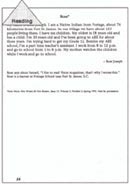
5. Reading: "Rose" * Some words in Rose's story (page 44) may be unfamiliar to learners. Before reading the story together, the facilitator may write up to five words on the blackboard or flip chart to get a sense of who's familiar with which words. Likely words might include "native," "village," "Portage," "assistant." * Based on the words used in the sight word list, learners can guess what (or who) the story could be about. Or, the tutor might tell them that the story is about a woman who is going to school, and see if learners are interested in making predictions about who she is and what she has to say about herself. (Does she have children? Where does she live? Is she married or single?) 6. Writing
* After reading the story, learners could construct their own stories about what might have happened to Rose since she wrote the story. Some questions to consider:
7. Making a cluster * The tutor (or one of the learners) writes the words "family issues" on the blackboard or flip chart, and the group then brainstorms and clusters ideas around the words.
|
| Back | Contents | Next |