|
Three members of the Literacy Committee, Evelyn Battell, Jenny Horsman and Linda Shohet, the latter also a member of the CCLOW Board, became part of the group in order to maintain a link with the Literacy Committee and the CCLOW Board. Aisla Thomson, then Executive-Director of CCLOW, worked with them in planning and executing the project. The committee hired Elaine Gaber-Katz and Moon Joyce to facilitate group meetings, invited the group to an initial meeting in Banff and, at that point, turned the project over to the group.
Our first meeting Some of us knew some of the other women in the group - the committee members obviously knew each other and Aisla, and some of us had been involved in the previous research project. Most of us knew no one else in the group. Moon taught us a Greek greeting dance, appropriately enough, since we had a lot of meeting and greeting to do. The music she brought, both the songs she sang for us and the songs she taught us, wove through our meetings. Early in the first session, we were asked to invoke the name and presence of some woman from our lives who would sustain us in our work. That litany of names, mothers and grandmothers, mentors and friends, heroes both real and fictional, women alive and dead, immediately doubled our numbers and multiplied our strengths and abilities many times. Each of us came with a variety of hopes and fears, as these excerpts from our minutes show.
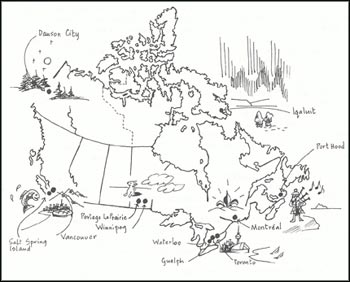
One major concern of the group was the process. We had been invited to come together to produce a book of curriculum, and we were eager to get started, but how could such a diverse group of relative strangers pull it off? Not only did we come from different places in Canada, but politically, too, we were all over the map, or at least we worried we might be. Some of us were afraid the book might be too feminist to put our names on: others thought that our feminist politics might get so watered down we couldn't live with it. Some of us brought special interests we wanted to be sure others would respect: among us are First Nations women, women of colour, white women, lesbians and heterosexuals, rural and urban women; our ages range from mid-20s to 50; we have a variety of hidden and not-so-hidden disabilities. |
| Back | Contents | Next |