|
This conscious attempt to produce a holistic resource for women gave some women an opportunity to express the reality of their lives and what is, or is not, available to help them work with that reality. At the centre of the approach is the idea that perhaps it is not the women in conflict with the law who have failed to function in society, but society that has failed to provide women with a realistic context for their lives. LaVera, Eileen, and Wanita identified several questions at the beginning of this process that continued to be important throughout the research. They included:
The resource booklets have received a great deal of attention from the community. Rather than having too little interest in the booklets, there are too few booklets available to meet the demand for them. Community schools in Saskatchewan have become involved in their distribution and some changes are being made as suggestions come in from different parts of the province. Perhaps the response of the women in the program might be summed up by Priscilla, one of the program participants: "In the making of this resource book, I think back to the times I found myself in a new, strange city, not knowing where to reach for help when I most needed it. I hope this book will be of some use to others who find themselves in similar situations." What was produced LaVera Schiele wrote a story that could be used as curriculum based on something that happened during the research: "I believe our lives are woven together like a spider web." It is included in Women in Literacy speak as are some excerpts from the resource booklets. " We found that union-based literacy programs can empower women workers when they pay attention to women's lives. 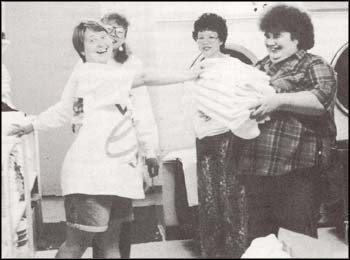 |
| Back | Contents | Next |