|
Fundamentals English Classes Malaspina College, Cowichan Campus Duncan, B.C. Cowichan Campus of Malaspina College is in Duncan on Vancouver Island. This is a town of about 8,000 people located in an area called the Cowichan/Chemainus Valleys which has about 60,000 people. Malaspina College also includes a larger campus of about 5,000 students in Nanaimo and two smaller campuses in Parksville and Powell River. Cowichan Campus has about 2,000 students, including an Adult Basic Education . (ABE) division of 300 students. 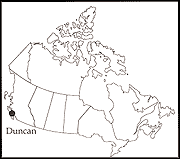
Other programs include vocational courses such as office administration and continuing care assistant, a Native Indian Teacher Education Program, a large community education program, and two years of university transfer credit courses. The college has recently become a degree-granting institution. Funding for ABE programs comes mainly from the provincial government, with special projects and particular classes funded by the federal government or First Nations band councils. The campus is on land belonging to the Cowichan Band. The student body varies, with about twenty percent First Nations students. The students in ABE tend to be older and poorer than the general student body, with a significantly larger number of First Nations students, students with disabilities, and those who are single mothers.
There are eight full-time staff in the ABE Division. Five are women and three are men. The campus principal is a woman and almost all the administrative staff are women. About half of the students in ABE are women. In terms of age, they cluster around 25 to 35. They can attend either full-time or part-time, and typically come in to take English, math, computer studies, and science, to complete high school work required for entry into post-secondary programs, or to get a grade 12 certificate. " I might say, for example, that our whole project turned out to be not woman-positive at all because we managed to put those women through an hour meeting where they got shouted at by two or three men and they felt so intimidated that they felt they couldn't express themselves and in the end didn't get what they needed to. You could be so bold as to think about what they needed. Or at least what they may have figured out that they would choose if they had been given an opportunity to choose. And so our woman-positive activity started off being a woman-negative activity because of the way we chose to organize it. Kate Nonesuch, Interview 2 |
| Back | Contents | Next |