|
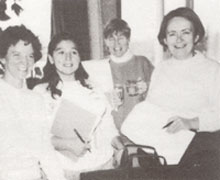
Friday, women worked in small groups, trying to make sense of discussion questions and getting to know each other in the process. As members of the planning group and advisory committee moved through the different rooms, we realized that women wanted more information about program-based research, the project, and what we expected them to do after the workshop. We met during an afternoon break in the agenda to completely replan the process. For some of the planning group members, the changes meant we were taking out sections with overt feminist content and replacing them with more neutral topics, such as "This is what the project is about. This is what you are expected to do." For other members of the planning group, the changes meant we were giving women a context for their participation in this project, an opportunity to meet in affinity groups where they could explore their past experiences and future plans in ways that felt comfortable for them. That evening, following a description of action research in general and this research in particular, women became more comfortable about the project and their place in it. We concentrated on the different tasks they would accomplish over the next eighteen months, dividing the work into three six-month sections. Each of these sections had a defining activity: reflection, documentation, and analysis. We spent time talking about what each of these might look like in different programs, in different parts of the country. Women raised many different issues, including questions about confidentiality, measures of success, how much support they would have, and how we would continue to communicate. Saturday morning, women met in four affinity groups, each one made up of contact women from three different programs. During our replanning the day before, we had organized these groups according to the different kinds of programs women worked with, what they planned to do in terms of a woman- positive activity, what issues they identified, and how they talked about their politics. During the day, each group moved through three different sessions. They talked about their possible woman- positive activities with Frances Ennis and me. They considered goals and objectives for their activities with Kate Nonesuch. They discussed different research techniques with Jenny Horsman.
Finally, on Sunday, women learned about the reflective writing process and how they might use it to document their activities. We then used that technique to explore our experience at the workshop. By the time we met for a final round, we had come a long way. Women talked now as acquaintances, even friends, who had discovered a great deal about other programs, other women, the research project, and themselves. There was laughter and quiet conversation as we took down program displays, gathered books and music, and talked about the next time we would meet. |
| Back | Contents | Next |