|
The women talked about how people are afraid of change - those who have power and those who do not. So many people say there is no need for change. "This is the way it is and you just have to accept it." At the same time, there is tremendous social pressure, tremendous guilt. Women must be good mothers no matter what their situation. 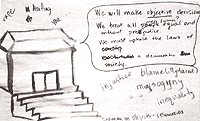
Yet women are so isolated. We are so isolated that we have little sense of community. We all live in little boxes. Women talked about self-esteem. What does that phrase mean? Who has to take responsibility for women's self-esteem? "Even the idea of self-esteem comes from a privileged background" one woman said. There cannot be self-esteem without validation, recognition. This is something we can give each other. Peer support is something we can encourage. But invisible in all this, at the bottom of all this, is poverty - poverty for women and children, and the lack of funding for programs that might help them. They say the system gives us objective equality. Really, the system is blind to injustice. Property and capital are more important than people. Women and children do not have a dollar value. The drawings and discussions they prompted facilitated our need to probe further for a clearer understanding of why these situations exist. Why are the structures that hold women back so strong? Why is it so difficult to bring about change? Why are women's lives the way they are?
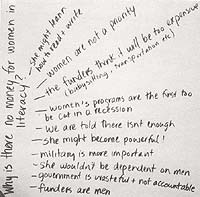
The women then identified key words or recurring themes that were represented in the drawings - poverty, guilt, self-esteem, funding, supports, validation, isolation, justice. Questions were developed for each key word to assist In further analysis of the theme. The women worked in pairs to answer the questions with each pair working on two themes. Some women listed their answers to the questions while others made fans. |
| Back | Contents | Next |