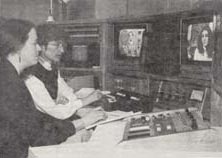
 Cathryn Boak and Joanne Prindiville prepare video for Women's Studies Course It helps women understands the significance of their paid work in Canada today and their vulnerability under present labour market conditions. A feminist perspective also challenges conventional definitions of work, legitimizing domestic labour and emphasizing the connections between paid and unpaid work for women in all types of families: single-parent, male breadwinner, two-earner, and so on. This feminist validation can strengthen women's recognition of their own rights and needs as workers. A couple of weeks ago I was included in the labour force survey for the first time and the women asked me if I worked. I said "Yes, I do a double shift; I work sixteen hours a day." She said "Oh my, girl, that's slave labour; we don't count that." I said she should count it, that it wouldn't cost Statistics Canada any more to record that kind of domestic labour. A multi-media approach not only makes women visible, but also legitimates their experiences in other ways. The use of readings and video-tapes shows students the work of earlier generations and exposes them to how an earlier generation experienced and talked about work. Films, showing women working at paid and unpaid jobs in other parts of Canada, helped broaden their perspectives. These resources stimulated discussion and analysis during teleconferences, as students saw that women have legitimate, though often different, perspectives. I'm a working Woman. I don't want my husband at my job talking for me; I can do it myself. No more would I want to be at his place of employment talking for him. If you're a homemaker and your husband's bringing in the pay cheque, everything that happens at his work place affects you - his wages, his conditions of work, where you're living, the whole bit. It's got to affect you, so you should have some say about it. Writing assignments about women and work helped to crystallize the students' views, and provided a feminist framework. Several students focused on the problems of women in two-earner families in isolated communities where there is little employment for men and virtually none for women. Under these circumstances, a wife's right to work is challenged and there is little sympathy from local women for the double day of work faced by working wives and mothers. In response, the course offered a feminist conviction of women's right to work and to experience an equitable division of domestic labour, and a heightened awareness of women's vital contribution to family income. |
| Back | Contents | Next |