|
MisEducation: Women and Canadian Universities REVIEW BY MICHÈLE PUJOL 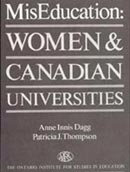
Anne Innis Dagg & Patricia J. This little book, which reviews the present situation of women in English Canadian Universities, is long overdue. It is doubtful that University administrators across the country will recommend it as "must be read", yet, it should be read widely, (at least in universities), and used as a basis to pressure administrations for change. There is nothing glorious about the status of women in universities in this country. The general attitude towards women and the employment practices of universities have changed very little; they have actually worsened in many ways. For instance, there were proportionally more women teaching in universities in Canada in 1931 and 1953 than today. It is also apparent that those who hold power in Academe are intent on preserving the ivory tower as a bastion of male supremacy. Reading Dagg and Thompson, and adding to their work the countless stories of demeaning and discrimination any female academic has encountered in her career, leads one to feel justifiably outraged. The overall picture drawn in MisEducation is one of calculated neglect of the right of women to be treated equally and fairly, of deliberate attempts to segregate them in academic job ghettoes, and of complete disregard for their needs (as students, staff, faculty members or taxpayers in the population at large) by the universities.
The book is organized in ten short chapters, analyzing the experiences of female students, the characteristics of the various disciplines taught at universities, the status of Women's Studies, research activities, the employment structure of the universities, the services they provide for women, and the issues of sexism, sexual harassment and violence. The book concludes with a set of recommendations. Each one of these chapters shows that the universities, despite their public statements, are riddled with rampant, insidious or sometimes blatant sexism. Little effort is made to improve women's access to non-traditional fields. Flagrant manifestations of male privilege as well as purely pornographic practices are still tolerated. Budget priorities for hiring, research, program funding, and services show that women and their needs are consistently treated with dire neglect if not outright dismissal. The few initiatives towards the integration of women are given a lot more publicity than the overall situation warrants. |
| Back | Contents | Next |