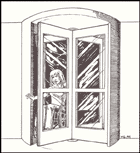
In Ontario, less than half as many disabled young people between the ages of 20 to 24 years are attending school than is true for the whole population (5). As a constituency, women with disabilities have been subjected to segregated and substandard education. A family in Newmarket, Ontario is currently fighting a decision by the York Regional Board of Education barring their disabled daughter from the classroom. The Board recommended that she attend a special class for disabled students in a school outside her own community (6). This is a type of inadequate and inappropriate solution that has meant that many girls with disabilities grow up to become women who do not have the skill level required for entry into most training programs. And few accessible training programs allow for literacy upgrading for women with disabilities. Training resources must be directed to general education and skills training programs. Specifically, academic upgrading for women with disabilities who have less than a high school education must be a priority as well as bridging programs for women in all areas, including the trades and technologies. Furthermore, these programs must be provided as part of a continuum to ensure that learners are equipped with portable skills broadly recognized by post-secondary educational institutions as well as employers. All too often, women with disabilities are faced with what I call the revolving door scenario. As members of doubly disadvantaged or marginalized communities, we are often not seen as viable and productive employees. As a result, those of us who do receive training often find that it is inappropriate, that it is in areas that do not interest us, or that it does not lead to secure and meaningful employment but to low-paying, ghettoized jobs. In short, we enter the door of training but exit right back out where we started. Other barriers to our full and effective participation in training programs include the fact that most training programs are designed to be taken on a full day basis over a short period of time. The disabilities of many women preclude them from participating in such an intensive schedule. If training is to be accessible, it must be offered on a more flexible time frame which includes longer term, part-time programs. Accommodation is the cornerstone of any accessible training program. Accommodation means providing essential supports like accessible transportation, accessible child care, attendant care, sign language or oral interpreters, readers, assistive devices, and other needed services. While some may believe that the cost of accommodation is prohibitive, I would argue that the cost of not employing women with disabilities is unacceptable. In a case study of a woman with a disability identified as 'Ruby,' it was found that the savings to the government in social assistance payments were formidable once she found suitable work. Over an eleven year period of employment, the government saved $130,000 in social assistance payments and received $70,000 in federal and provincial taxes, Canada pension plan and unemployment insurance contributions, totalling $200,000 (7). |
| Back | Contents | Next |