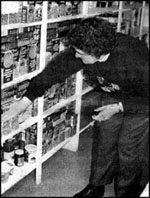
Food Banks lend a helping hand A community food bank starts because the need is there. People see that need and work together to try to fill it. Like any organization, it starts small and grows gradually. "A food bank has to follow the guidelines of a legal company," said Grand Falls-Windsor/Bishop's Falls Community Food Bank president Mary McLaughlin. It has a president, vice-president, secretary, treasurer, and committees. McLaughlin has seen their bank grow since it started on November 4, 1993. It is a member of the Canadian Association of Food Banks. This means it gets donations from the Food Sharing Association. The need for food banks People use the food bank for different reasons. Low income people, those waiting for unemployment insurance cheques, students, and others come to the food bank when they need food. "There are lots of people in need out there. They only come when they are really caught," said McLaughlin. People who use the food bank are shown total respect. They have a private meeting with a worker in the food bank office. Everything is kept confidential. They state their need and the worker fills in the forms. They are then given the size food hamper that fits their needs. Only one hamper is given out to need is there. Someone who needs food at times when the bank is not open can phone and leave a message. "We're conscious of situations that cause people to come to the food bank. We do everything we can to make them feel comfortable," said vice-president Terry Brown. Who gives the food Food banks get food from the Community Food Sharing Association. The food given out by each food bank is donated by local businesses, organizations, food drives, and the general public. Schools and churches also give a lot of food. Money donations are spent for rent and for buying food items that run low. The president appeals to the public be radio, TV, and newspaper. "When we receive food and money from the community, we see that it gets to the people who need help," said Mr. Brown.
Food hampers Food bank workers follow a list to fill the hampers. The person gets a hamper based on the number of people in the family. Workers get hampers ready to pass out when people come during food bank hours. They give candy and other treats for children. Christmas hampers take a lot of food and time to fill. Volunteers start planning for them in September. Jim McCarthy heads the Grand Falls-Windsor/Bishop's Falls Food Bank food procurement committee. He makes sure all the food is picked up from the food drives and different places that give food. Volunteers work every night for two weeks filling Christmas hampers. Each hamper has about $75 worth of food. Last year this food bank alone gave out 450 Christmas hampers. "It is amazing how people give when you make an appeal," McCarthy said. Community Food Sharing Association The Community Food Sharing Association in St. John's sends food to all parts of the province as needed. It gets bulk food from the mainland and local wholesalers. Day and Ross delivers food free of charge to places in Newfoundland. Oceanex delivers from other parts of Canada by boat. Last year Food Sharing Associations handled 7 million dollars worth of food. They have sent food to Labrador as well as around the Island. It started in 1988 and has been organized like it is now for the past six or seven years. "The more food there is, the greater the demand for it," said Community Food Sharing Association general manager Egbert Walters. "Remember the same person who eats Christmas week eats the other 51 weeks of the year. The need is there throughout the year, especially summertime," he said. Numbers There are 54 organized food banks in the Province. More are being opened all the time. Provincially, 45,000 people use food banks. Forty percent of users are children. The Grand Falls-Windsor/Bishop's Falls Food Bank served 4,120 people in 1998. "A study done last year shows that Newfoundland and British Columbia are the highest users of food banks," said Mr. Walters. |