|
Man builds model of The Matthew His eyes aren't as strong as they used to be. His hands have grown a little shaky with the passing years. But this hasn't stopped Onias Ralph from building model boats. Mr. Ralph was born on Small Island in Bonavista Bay. He says boats were a big part of his life. Mr. Ralph can remember seeing hundreds of schooners that used to fish off Newfoundland. He worked as a carpenter and moved to Grand Falls-Windsor in the 1970s. He has built more than 30 schooners and three dories. 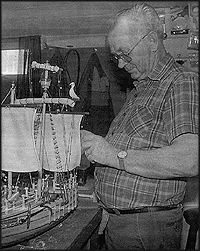
In 1987, Mr. Ralph told a friend that "this is the last boat I'm going to build." That was 10 years ago. Mr. Ralph has built six boats since then. Mr. Ralph saw a picture of John Cabot's boat and decided to build a smaller one. He says he was joking with his son, Derek, about building it. Derek and his wife Kim encouraged Mr. Ralph to build it. John Cabot sailed from Bristol, England to Newfoundland in 1497 in a ship named The Matthew. Mr. Ralph's ship is a lot smaller than the real Matthew, but it has sails that really work. Mr. Ralph built his ship using juniper and oak. It took him two weeks to finish the ship. Mr. Ralph plans to give the boat to his grandson when he gets older. |
Onias Ralph has been building model boats for many years. He has built more than 30 model schooners. He saw a picture of The Matthew and started to build a model of it. It took Mr. Ralph two weeks to finish the boat. |
|
Red Cross warns about ice safety Winter will soon be here. People will be going out on frozen lakes and rivers. They will fish, skate and ride snowmobiles over the frozen water. The Canadian Red Cross reminds people that ice activities can be dangerous. Ice must be at least six inches thick to hold one person. It must be at least eight inches thick to hold more than one person. Ice must be ten inches thick before you drive a snowmobile on it. And, ice must be 16 inches thick to hold a car or truck. The only way to know if ice is thick enough is to cut some holes and measure it. Make sure you are tied to shore before you cut the holes. Don't forget to mark the holes with a twig so other people won't fall into them. Don't panic if you fall through the ice. Grab the edge of the ice and kick your feet. As your legs rise to the surface, use your arms to pull yourself up on the ice. Roll or crawl away from the hole. If you stand up you may fall through again. For more information contact your local Canadian Red Cross. |