| FIGURE 89 |
Intelligence, Literacy and
Occupations |
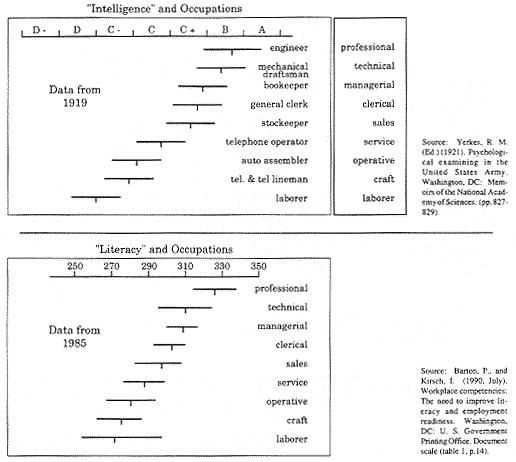
This figure shows that whether one calls adult
cognitive skills "intelligence," as in 1919 during World War I, or "literacy,"
as in 1986 when the profiles of young adult literacy were published, the
distributions of cognitive skills in different occupational categories remains
the same. The least skilled are found more often in the lower-status, lower
paying occupations, which typically demand less education, while the more
highly skilled are found in the higher status, better paying, more
educationally demanding occupations. Interestingly, during World War I, over
30% of laborers had their "intelligence" assessed using the Army Beta test for
illiterates or non-English speakers (see Part l of this Compendium). The 1985
young adult literacy survey used a literacy test for all those surveyed
(non-English speaking were excluded). The fact that a literacy-based test could
be given to almost all young adults, including laborers, in 1985 reflects the
fact that considerable gains have been made in rendering the population
literate in the last three-quarters of a century. Despite this, the least
skilled still occupy the lower rungs of the occupational ladder.
|