|
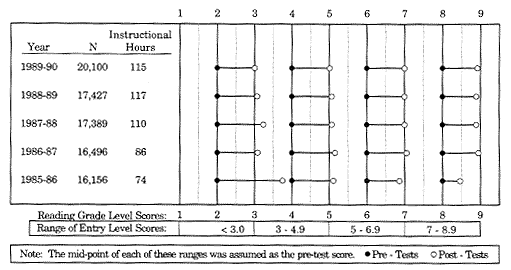
THE LITERACY ASSISTANCE CENTER The Literacy Assistance Center (LAC) in New York City provides centralized support services to literacy provider agencies in the city. These agencies provided literacy instruction to more than 50,000 adult students in 1989-90. Of these students, over 20,000 (37%) were enrolled in adult basic education, the remainder were in English language courses. All the provider agencies in the New York City Literacy Initiative submit data on demographics of learners and instructional factors to the LAC. The instructional factors include data on the number of contact hours and the pre- and post-test scores of students. The test used to measure reading skills is the Test of Adult Basic Education (TABE). The LAC prepares reports showing several ranges of entry level scores of learners and the gains they make in the program during the year. Data for five years (1985-86 through 1989-90) are presented in the figure below. For this figure it was necessary to assume that the pre-test scores were at the midpoint of each of the entry ranges. For instance, in the range of entry scores from 3 to 4.9, the pre-test score for each year was assumed to be 4.0. For the lowest range, scores less than 3.0, the entry score was assumed to be 2.0 for each year. As the figure indicates, setting aside the data for 1985- 86, which was the first year data were obtained and reported by the LAC, learners made about a "year" of gain on the TABE regardless of the entry level scores.
|
||||