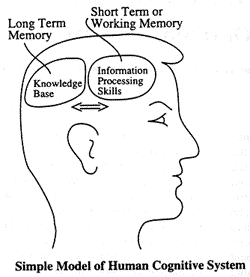
Extensive research by the armed services(surveyed in
Sticht, l992) indicates that three major factors that render people
able to score high on either intelligence, aptitude or literacy tests
are A general finding from numerous assessments of adult cognitive abilities is that, with a broad range of abilities in the test population, there are high correlations among performance on intelligence, aptitude or literacy tests. In one study by the Department of Defense, correlations between the military's verbal aptitude test scores and scores on any one of five different standardized tests of reading were in the .8 to .9 range, about as high as they could get given the psychometric properties of the tests (Waters et. al., 1988, p. 46). These high correlations indicate that on any one of the tests taken at random, highly literate persons will achieve in the upper range of scores, moderately literate persons will score in the mid-range, and less literate persons will score in the lower range of scores. An implication of these findings is that, if adult literacy education programs are to be judged successful in producing graduates who are considered highly literate, these graduates should be able to take any number of standardized tests of either intelligence, aptitude or literacy and perform well on them, certainly above the 60th percentile. Graduates considered moderately literate should be able to score in the mid- range on any one of these types of assessments, i.e., from around the 40th to the 60th percentiles. Adults who leave programs unable to reach the mid- or high- levels of literacy will tend to perform poorly on any one of these assessments of cognitive abilities. |
|||||||