|
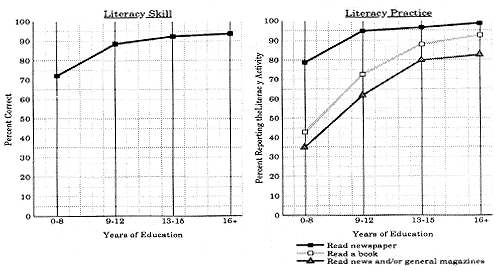
Adult Functional Reading Study -1973 The first part of the Adult Functional Reading Study conducted household interviews to determine what kinds of literacy practices engage adults. In the second part of the study literacy tasks were developed and administered to assess the literacy skills of a second household sample. Data from the two parts of the study are summarized in Figure 33. Though 170 items were administered in the study, only five items were released to the public. The data for literacy skills based solely on the five items are presented Figure 33. The five items themselves are given in Figures 34, 35, and 36. Over all 170 items, over 70 percent of the respondents scored 70 percent correct or better. As a trend, better educated -adults performed better on the test than less well educated adults, and whites tended to perform better than blacks. As with Buswell's (p. 43) study, both literacy skills and literacy practices are seen to increase as a function of extent of education. Book and magazine reading were more highly related to years of education than was newspaper reading. Altogether, the adults reported that they spent about 90 minutes a day in reading one or another type of materials (including such things as forms, labels, signs, bills, mail, etc.).
|
|||||