| Assessing the Complexity of Literacy Tasks |
 |
|
Locating is the process of matching given information in a question or directive to features in the document to find requested information. The closer the degree of correspondence (congruence) between the search term and relevant features in the text, the easier the locate task. The chart below is used to relate various medical conditions to motor vehicle operating licence classes. To use the chart in the normal way, one would have to approach it with a question; otherwise why look at the chart? The question would probably take the form of “If I have condition x, can I get a class y licence?” The specific medical conditions listed have been ‘nested’ under larger headings such as ‘vision requirements,’ ‘hearing requirements,’ etc. to make a more efficient search possible. For example, what operating classes are available to someone whose vision is only 6/12 in the best eye? The given information for this question ‘vision in best eye is 6/12.’ The information requested is ‘operating classes available’ Looking down the first column, there is a direct match for ‘vision.’ Within the ‘vision’ category there is a direct match for ‘best eye’ and ‘6/12.’ Looking across the row, we find that someone with vision that limited can actually get a class 5, 6 or 7 licence. A more difficult task would be to ask, “What licence classes are available for someone with sleep apnea.” There is no direct match for the given information and it requires special background knowledge to see that ‘sleep apnea’ is a dysfunction of the ‘nervous system’ and then to relate it to ‘loss of consciousness’ within this category. This creation of a new search term is a complex ‘generate’ task. Looking along the row, we discover that people who may fall asleep at the wheel are not eligible for any class of licence. 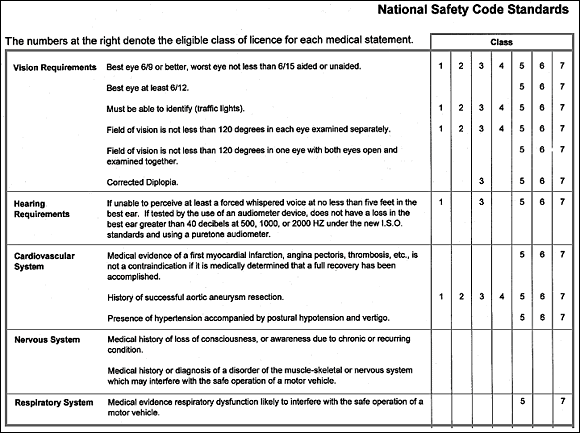 |
| Previous page | Table of contents | Next page |