| Assessing the Complexity of Literacy Tasks |
 |
|
Cycling is the process of making several locate matches within or between paragraphs to identify two or more pieces of information. When the locate matches relate to a common set of conditions, we refer to the cycles as independent. For example, consider the case of a parent who wants more information about keeping children’s lungs healthy. The parent looks in Services for Children (1) and finds the section dealing with child nutrition and health care shown on the following page. He or she poses the question, “Which of the publications listed here will give me information about maintaining healthy lungs” The search is made more difficult because a high text-based inference is required to make a match. The language used in the text does not explicitly mention the words ‘lung’ or ‘healthy lungs’ but general background knowledge would relate ‘respiratory diseases’ and asthma to unhealthy lungs. The same general background knowledge allows most people to make some inferences about the need for clean air which is free from smoke and pollutants. The parent will then have to scan through all seven paragraphs in this passage to discover the two publications that fit the search criteria. ‘Cycle’ tasks are easier when the reader is told how many items he or she must find. However, in this case, the number of items requested (or productive matches) is unknown and the whole passage must be scanned until all possible matches have been made. Another common type of cycling is ‘sequential’ or ‘dependent’ and uses the results of the first locate as one of the search terms for the next locate in the cycle. Typical of this type of matching is a search through a catalogue for a part number which is then used as a search term when looking in the price list. The first locate (finding the part number) in the cycle is ‘independent’ but the second locate (finding the price) is ‘dependent’ on the first. In the sample questionnaire items shown below, the first task (3a) is to locate the label that matches your ‘new marital status’ and mark it. This is a locate task matching one word to another. Item 3b, provide a date, requires the respondent to examine the four options until they find the one that matches the response given in the previous item. The ‘given’ information for 3b is a new marital status (married, common law, etc.). Matching the given term allows the respondent to locate instructions about how to complete the item. The second part of the task, entering the date, is dependent on the first match, getting instructions for entering the date. 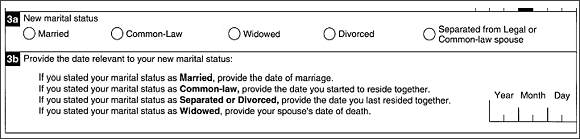
|
 |
||
| Previous page | Table of contents | Next page |