|
Fifth, we are literacy specialists and research the readability levels of texts and rewrite them to match the reading abilities of our audiences. Finally, we are navigators. We help consumers through the murky worlds of insurance, wills, agreements, and financial documents. On our communal pilgrimage, we search for, teach about, and create plain language, the heart of communication. Without it, we turn would-be-readers into exiles in their own linguistic homelands. Without it, we subject readers to a colonial mindset. A refusal to learn and practice plain language betrays democracy. Exclusionary language creates monopolies of power. Plain language makes content accessible to readers. I believe that defending legalese because of its "noble history" represents a regressive romanticism. Plain language supports the public good and empowers citizens. Our world surrounds us with threats of terrorism, unstable markets, and global unrest. As our Canadian Governor-General's husband, John Ralston Saul, writes in another but related context, "It is precisely in times of difficulty and confusion that the public good needs most to be asserted . . . What this requires is a belief in the long-term cause of reform." Plain language is a slow, gentle pilgrimage that puts heart into communications. We plain language specialists do not always agree. Yet, as our movement matures, my hope is that our differences take place in a context of respectful exchange and reform. Isuma is an Inuit word that refers to the knowledge of our responsibilities towards society that grows over time. The heart of our movement is here in this room. It is in our plain words. Thank you. 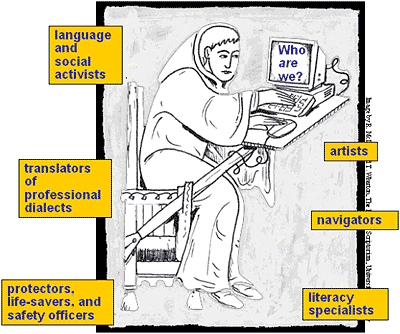 |
 |
||
| Previous page | Cover | Speaker Profile |