|
Making Connections:
The relationship between literacy and poverty is complex but important in the way if affects women's lives. . Only 25% of functionally illiterate women are in the paid labour force compared with 50% of women as a whole.1 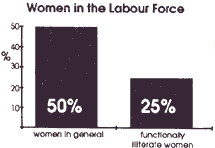 . Half of all female-headed families live below the poverty line. The rate of illiteracy in this group is much higher than the national average. . Jobs available to women with poor reading and writing skills are traditionally the lowest paid jobs - such as domestic work, sewing machine operation. . The average woman of any educational status who works full time makes only 68% of what the average man makes. Women with less than grade 8 make on average only 59% of what men earn 2 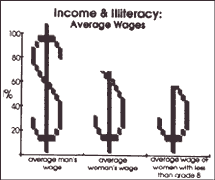 What are the Barriers to Women Learning? Women enter literacy programs for lots of different reasons. Often a woman hopes it will be a step towards a better job or further training. Sometimes mothers want to be able to be more involved in their children's education. And, most women hope that literacy will enrich and improve the quality of their lives. However, a woman's desire to learn is often mediated by other circumstances in her life. Literacy workers must look at the pattern of a woman's life, and at the role a woman's responsibilities and relationships play in her decision making. Understanding and valuing a woman's situation will help educators provide ways for her to continue learning. The following may be important factors: Children at Home Responsibility for childcare may hinder a woman's ability to participate in literacy programs. It may be difficult for her to get baby-sitters or childcare at the times when classes are available. Once in a program, a woman might be kept from attending classes by her children's illnesses. At home, children often distract their mothers from completing or concentrating on homework. Demands of Husbands and Boyfriends Men in a learner's life may feel threatened by her attempt to do something on her own and especially by an attempt to become better educated. While many men are supportive, others are not: their negative reaction may range from just not helping her (for example, no baby-sitting while she goes to class) to verbal, emotional or physical abuse. Isolation in the Home Women become isolated in the home for many reasons. For women already isolated by their lack of reading ability, this may be a formidable barrier to even finding out about a literacy program. Isolation often comes from traditional expectations that a woman should stay at home. Mothers - especially sole-support parents - are often isolated in the home. One-tenth of all families in Canada are headed by single parents and 80% of these are women. The rate of functional illiteracy among these single parents is 36%, much higher than the rate for the population as a whole.3 |
| Back | Contents | Next |