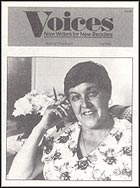
Some writers rebuke the media for misrepresenting their experience. In her Letter, "Dear Sir," Ruth comments on the insensitivity of a CBC television interviewer on the evening Journal:
The descriptions of peoples' working lives, told so honestly and simply, are piercing. One gets a sense of a lifetime of thoughts distilled to a few clear paragraphs. Leslie Kish talks about the realities of his life as a longshoreman:
The stories tell why some of the new Canadians chose or had to leave the countries of their first language, and of the joy the writers take in their newly developed skills. Voices is a very worthy publication that should reach all new readers and writers in Canada. I would encourage any programs, tutors, teachers and learners working to overcome illiteracy to subscribe. For editorial or subscription information write to: Voices, 14525 110A Ave, Surrey, British Columbia V3R 2B4.
|
| Back | Contents | Next |