|
creating a better learning environment The Creative Process and
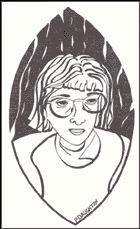
Visual art has always been a part of my life. At times, I have focused more attention on relationships, work for pay and education, but I have always returned to visual art. I now find I am able to integrate creativity into all aspects of my life. Recently, I was accepted into a graduate level Art Therapy Program, and, funding permitting, I hope to help others lead a creative life. I would like to focus on my explorations in art and how it has assisted me in healing. I will include some personal strategies on how the creative process can foster self-awareness and growth. The Role of Art In my early years as a student, I did not consciously examine the role art practice played in my life. I simply felt myself compelled to create and communicate via a visual language. Later, in university, I began to realize how systemic sexism and violence had a controlling effect on every aspect on my life. Incidents in my teens and early adult years come into focus under a harsh new light. I had in me an incredible plethora of repressed emotions: fear, anger, hate, and pain. After failed attempts to intellectualize these emotions, I began to use the tool most accessible to me--visual art. The visual process allowed me a voice that was absent from other areas of my life. I was, in fact, free to communicate in a way which presented few external barriers. I began focusing on the visual expression of hostility and anger. Art began to take on a cathartic role; that is, by expressing my hostility and anger in my art, I came to address repressed emotions. Finding voice and expressing emotions is an empowering experience. To have voice, in whatever form, is a necessary tool for self-awareness. Within the framework of visual art we can examine our behaviours or attitudes and seek out options. The following section will present one of the many ways in which to explore the self. |
| Back | Contents | Next |