|
F. Role Models 1. Reading
* Ask students to go through newspapers and magazines to find stories that make them feel good. Have them bring the clippings into class. Bring in clippings yourself, especially of women who have achieved a long-term goal, overcome an obstacle or raised their self-esteem. Bring in stories that speak of some of the concerns raised by your students during the program. * Over the next number of weeks, read the articles in class. Have students copy words they are unfamiliar with and add them to their personal dictionary. Design comprehension questions around the reading: Who? What? When? Where? How? Why? 2. Interviews * Ask students to interview each other for a classroom newspaper article. Ask, "What do you do well?" "What have you done that deserves recognition?"
3. Research * Ask students to do a research project on women in Canadian history or women in their province or local area. 4. Writing * Ask them to write their own history. Allow them freedom to be imaginative, to do this in whatever way they are most comfortable, for example, drawings, photographs, words, song, etc. Let them include whatever information they wish. * On completion of the project, have them add their history to their tool kit. * This might be a good time to give them a mirror for their tool kit - to see themselves as role models in the world. 5. Sharing * Have the students bring in books or tools that help them in the roles they play. * Ask students to find a partner; each partner should tell the other about the roles they model, about the books or tools s/he has brought, and how and where they are used. * Ask students to tell their partners about volunteer work they are involved in. What do they get from working with others? * Each learner should tell the class about his/her partner. 6. Presentation * Ask students to give a presentation which centres on their abilities. If they are good at sewing, they might do an introductory lesson on sewing or some aspect of it; if a carpenter, they can show the steps in building a planter or something else; if an artist or cook, the steps involved from the start to completion of a project.
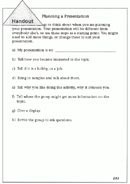
* Students may want to use the outline
The premise behind this activity is the importance of validating and affirming a person's self-worth and what is important to him or her. This activity could be ongoing and done over the course of a number of weeks. If carried out to completion, individuals would not only share a bit of who they are, but in presenting familiar information they would gain confidence in speaking in front of others, and the group would appreciate the information because they would be learning from each other, all of which goes a long way in reinforcing self-esteem. * As a follow-up, invite students to give a short report at the beginning of each day on what they accomplished the previous day. Have them indicate something they want to be recognized for. |
| Back | Contents | Next |