|
E. Safer Sex: Making Choices
Reassure the group that they will not be asked to talk about
their personal choices.
1. Writing
|
* * * * * * * * * * * * * * * *
Your group
might want to print their poster to share with others, or write a pamphlet on
safer sex.
You will find the information necessary to fill in
the chart in "Women and AIDS: Choices for Women in the Age of AIDS," pages 1
and 4. "Making Connections: A Booklet about Women and Prescription Drugs and
Alcohol" might be helpful. Some categories on your chart may have very little
information. The information is available but may be hard to access. Ask your
speaker and STD clinic about risks and precautions for safe sexual touching.
Refer your learners to the pamphlet "Safe S/M: Advice on AIDS Prevention."
|
|
* Make a list of different ways a woman can protect herself and
her partner.
* Make a poster-sized list in seven columns, with these
headings:
- intercourse
- anal intercourse
- she gives a man oral sex
- her partner gives her oral sex
- sharing sex toys
- sexual touching
- s/m
* Divide each column into two rows; label them "Risks" and
"Protection."
* List the risks for each category of sexual activity.
*
List different ways that a woman can protect herself during each sexual
activity.
* Discuss which choices are safer. Rank them from safest to least
safe.
* Check your information with your speaker and an STD clinic.
*
Rewrite your chart so that each column has the safest choices on top.
2. Guided discussion
* Who is responsible for safer sex? Some questions to consider:
- Who should carry condoms, the woman or the man? Why?
- What are the benefits of taking responsibility for safer sex
and planning safer sex in advance?
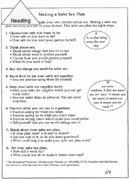
3. Making a safer sex plan (a
silent activity)
* Give learners a copy of "Making a Safer Sex
Plan".
* Explain that this is a silent activity because you are asking
them to think about their personal choices in safer sex. If they choose to
write, no one will read what they write, unless they request it.
* Read each step together, giving learners time to come to
silent answers.
F. Overcoming Barriers to Safer
Sex
Consider what you might do to help women feel safe, without
asking whether violence has been a problem. You can be flexible and sensitive
to the group, and be ready to stop or change direction. You can allow for
personal speech as well as more distance in discussions; after someone speaks
personally, you might bring the conversation back to "how else can a woman..."
Much of this chapter explores barriers to safer sex with men, so it is
important to try to include lesbian experience.
1. Media analysis
* Bring some magazines or pictures of a woman and a man relating
together in social situations.
* Learners can work in pairs to select a photo, discuss the
following questions, and present their photo and analysis to the group.
* Questions for partner pairs:
- Would the woman in this picture ask the man to use a condom?
What would she say? What would he say? Would they use a condom?
- Would the man in this picture tell the woman he wanted to
use a condom? What would he say? What would she say? Would they use a condom?
* After each pair has presented a photo, ask the group to
discuss these questions:
|
* * * * * * * * * * * * * * * *
If this
discussion moves into "How can women get men to use condoms?" you can say that
lesbians may also have problems negotiating safer sex.
|
|
- Do women want safer sex than their partners do?
- Are we influenced by the magazines we read? How?
- Are we influenced by TV and the movies? How?
|