|
D. Other Things Being Equal
The objectives of this section are to discuss the persuasiveness
of stereotyping people solely on the basis of their group membership, and to
become aware of our own biases.
This exercise depends on a bit of sleight of hand by the
teacher. One small group discusses one learner, and the other discusses a
second learner. The two profiles of the imaginary learners are identical except
for their sex. The groups should not know that other groups have a different
profile or how the profiles differ.
|
* * * * * * * * * * * * * * * *
I read about
this idea in 53 Interesting Ways to Promote Equal Opportunities in Education
by Vicky Lewis. The case studies should be adapted according to the group's
background. This is to ensure the relevance of the situation to the majority of
the learners in the group. For example, if a group consists mainly of women
with children, the profiles could be about an imaginary niece and nephew, son
and daughter, or sister and brother.
|
|
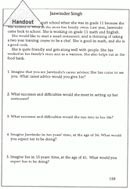
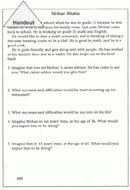
* In small groups, learners discuss the career options and
projected futures of two imaginary learners
(page 106
- page 107). Each member of the group reads the profile
and shares his or her responses to the questions on the handout. The group
compiles the responses into a single list.
* Reveal the difference between the two profiles to the group,
then ask the groups to exchange their lists with a group that had a profile of
the opposite sex. Some questions to consider:
- Are there any differences between the two lists? If you
think so, what are they?
- Do they imply stereotyped views of men and women?
- What are the stereotyped views of men and women in your home
culture? Why?
- What are the dangers of stereotyping individuals?
- In your personal life, how have you conformed to or defied
stereotyped views?
|
* * * * * * * * * * * * * * * *
To bring out
our assumptions about race or abilities, write two profiles which differ in
only one of those aspects.
|
|
|