|
The others included hospitality, personal care, and sales. Similar percentages occur in Ontario (5). Clearly the trend in re-entry is to offer women conventional, if "enriched," occupational training. 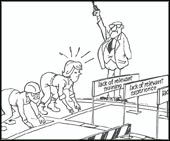
There have been exceptions in Nova Scotia. Although training for male blue-collar work has been confined to provincially administered Social Assistance Recipients (SARS) program's, re-entry training in entrepreneurship and management skills has been sponsored. During the course of my more general research, I traced one of the managerial courses as an example of an attempt to get women into higher level jobs than those typically targeted by the program.
Women in Management Training Program, Aside from brief general descriptions of the areas of business management, such as marketing and finance, a good deal of the curriculum fit into the life skills category. Life skills is a required component of all re-entry and SARS courses in Nova Scotia; my observations of many different life skills classes showed the actual material presented varies. The WIM approach to life skills, as remembered by the participants, put a great deal of emphasis on group decision-making, cooperation, building self-esteem, and constant and intense self-evaluation. Learning as a Group I tend to not be a group person. I tend to prefer to work totally alone. I found it hard to be probably one of three or four people who wasn't extremely well off, going back to work for something to do. I was the only person in there who desperately needed to work. I had a lot of trouble emotionally dealing with a group of women whose biggest concerns were things like "should I buy the $250,000 house or should I buy the $150,000 one" and I was sitting there barely able to buy groceries. It would have been better if there had a balance but there wasn't. |
| Back | Contents | Next |