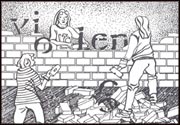
Gulp! Isn't this what my literacy student was saying to his educated wife all these years when he refused to let her teach him how to read and write? And how is he going to come to terms with learning to read and write with the help of someone like me, an educated volunteer and a woman? Am I supposed to take a lead from the passive attitudes and practices of my literacy student's and the bricklayer's wife? Am I supposed to offer my services without remuneration and complaint to the larger cultural project (literacy development in Canada) when the very material I use insults my intelligence and, yes, threatens my dignity as a person? What to do? I am not so certain. Talk to the authors perhaps? They could very well be literacy learners and instructors themselves. Talk to the publishers perhaps? These stories are often, as in this case, published by the learning centers that generate the narratives themselves. Talk to the people who select the reading materials for use in literacy programs? My point is, the social and technical hurdles a person must face when he or she comes to reading and writing later in life are often plentiful and can seem overwhelming. As I have experienced, primary adult reading materials that reinforce the marginalization of the efforts and intelligence of women only present more obstacles to the learner and facilitator. A sexist exchange over a pint in a pub in London might be fun for some folks, but representations of it in primary adult reading materials are inappropriate in any learning context anywhere, and especially in a field so heavily populated by women. Minke S. Venema, herself a skilled trades person and returning student, is completing the final semester of an undergraduate degree in Visual Arts and English as well as a Literacy Instruction Certificate at Simon Fraser University. In the course of her studies she volunteers as a one-on-one tutor and classroom assistant in a number of learning centers throughout the Greater Lower Mainland of B.C. |

| Back | Contents | Next |