|
The human
potential
for joy
is a
valuable
means of
healing
ourselves
and our
communities. |
|
On a practical level, when play can be infused with learning we
become more energized and involved intellectually and emotionally. "If it's not
fun, it's not worth doing" was a sentiment often repeated by the women. When we
engage in playful learning we temporarily suspend judgment, "go with the flow,"
and venture into the unknown, daring at times to rock the cultural boat.
Playful thinking helps the way we come to know things, stimulating us first
through intuition or the senses, later helping us to put hunches into words.
Experience becomes trusted as an important source and method of knowing.
Sharing and reflecting on experiences with friends and colleagues shapes our
learning, deepens and expands what we know, and makes the whole process more
enjoyable. 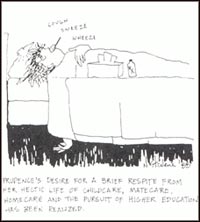
Competition and having to perform according to other people's
standards alienates and inhibits us from expressing the best within us. The
"best within us" is often submerged and unavailable, waiting to be released
when we discover our "voices" and begin to believe in ourselves as members of a
community of knowledge-makers. Until then, many of us perfect male-style
procedures for achieving success whether this be in institutions of learning or
at the workplace (Belenky et al.).
Affirming our playful selves is not always easy and may even be
accomplished at great cost in the western world because of contradictory
messages around play and fulfillment. We are promised the wonders of the good
life when we drink the right beer, chew striped gum, or use sexy
antiperspirant; at the same time, guilt is imposed on excessive pleasure and
delight. In double-speak, "doing your own thing" may actually mean doing what
everybody else does. When playfulness leads to thinking for ourselves or acting
defiantly in the face of oppression it becomes a radical act. Joyful, creative,
and spontaneous behaviour can be threatening to those who value order,
conformity, and control. The ability to freely imagine, to colour outside the
lines, and to take action toward "what could be" may actually work to subvert
"what is," or the status quo. Dale Spender notes the delight many women
experience when they learn its okay, even empowering, to be angry and defiant.
Canada's Raging Grannies are a case in point.2 |