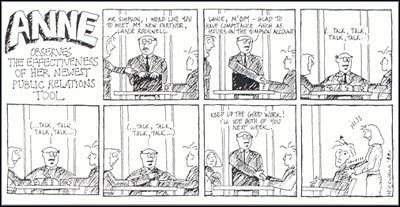
Student Acceptance Students who have participated in the Family Violence Units at the intermediate level have evaluated their experiences very positively. Most students appreciate the opportunity to discuss the issue and most know of someone who has experienced some form of violence. Parents too have been supportive, and the most frequent comment has been that the program should occur earlier in the students' education. Teachers have found that students learn a great deal during the family violence units. For some, it becomes an opportunity to disclose that they have experienced abuse or have witnessed wife assault. One necessary component in the planning for this program is ensuring that mechanisms are in place for children to tell their stories in a safe setting in order to get help. Conclusion Our school-based program helps school staff and students identify issues and needs and reach out to appropriate community contacts. It is well documented that since the be- ginning of our initiatives, requests for information and speakers from the Council have risen dramatically. A strong link is made between the community and schools. Family violence prevention curriculum is not mandated. The Boards and teachers them- selves have identified this issue as a high priority. They are giving up lunch hours and other planning time to accommodate program development. Staff volunteer to be involved in the program and, in our experience, staff who were initially reluctant to get involved have come on board, resulting in a strong school-based team. The Family Violence Prevention Project is one example of an innovative and ambitious program. In the course of planning and discussion, there has emerged, at least, a common understanding of the nature and prevalence of the problem. Education is a crucial factor in any strategy for change and, while schools are the focus of this particular project, the elimination of violence against women and children will require the education of all members of society. Reprinted from WEdf, Winter 1992/93, Volume 10, Number, Cartoon reprinted from WEdf, Fall 1988, Volume 6, No.4.
Suzanne Mulligan is the Executive Director of the Community Child Abuse Council of Hamilton-Wentworth, Ontario. Dr. Donna Mitchell has been with the Council as Curriculum Design and Coordinator since the inception, and shares the development of curriculum for elementary and secondary levels with Joan Fisher. |
| Back | Contents | Next |