|
|
|

| Volume 6 Number 1 | Published by the Literacy Development Council Newfoundland and Labrador | May 1998 |
|
In July 1996, the TAGS Program was changed to keep it within its original budget.
Since the TAGS Program began, some fisherpeople have retired. Others are working in other areas of the fishery. Many are self-employed as a result of help received under TAGS. In October, 1997 the federal government appointed Eugene Harrigan to find out what will happen after the TAGS Program is gone. Mr. Harrigan released his review early in February of this year. Sue Kelland-Dyer is the leader of the Newfoundland and Labrador Party. She says Mr. Harrigan's report suggests its okay for people to leave this province in droves. She also said the report suggest the loss of the fishing culture is no big deal. Kelland-Dyer said the report doesn't promote recovery and growth. The Harrigan Report suggested that older fisherman and plant workers be offered early retirement packages. Employment Insurance regulations have been changed to allow people who receive TAGS to get EI benefits after the TAGS program ends. Benefits paid under TAGS will be counted as weeks of employment. This means that TAGS clients will not be considered re-entrants to the labour force. In areas where there is high unemployment, only 420 hours or $2,500 in earnings for self-employed fishers will be needed to qualify for employment insurance. This compares with usual figures of 910 hours or $5,500 needed to qualify. |
| NEWSLETTER ARCHIVE | NEXT |
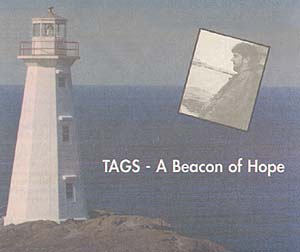 The TAGS Program
is scheduled to end on August 31. Four hundred Newfoundlanders were surveyed in
January of this year. Fifty-one per cent of them don't think there should be
another program to help unemployed fishers. The Atlantic Groundfish Strategy
(TAGS) began in May of 1994. TAGS helped people affected by the closure of the
groundfishery in Atlantic Canada and Quebec in 1992. The TAGS Program cost $1.9
billion.
The TAGS Program
is scheduled to end on August 31. Four hundred Newfoundlanders were surveyed in
January of this year. Fifty-one per cent of them don't think there should be
another program to help unemployed fishers. The Atlantic Groundfish Strategy
(TAGS) began in May of 1994. TAGS helped people affected by the closure of the
groundfishery in Atlantic Canada and Quebec in 1992. The TAGS Program cost $1.9
billion.