|
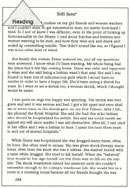
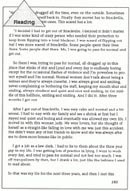
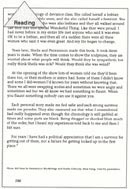
D. Still Sane This is a terrifying, powerful and moving story of Sheila Gilhooly's struggle to keep her sanity during a time in her life when everyone around her said she was crazy because she was a lesbian. Years later, Sheila wrote the story, and Persimmon Blackbridge, an artist and friend, made clay body-size sculptures to go with the story. They called the resulting show "Still Sane." Later the book of the same name was published. The book has photos of the sculptures and the text; as well, there are essays and short personal accounts by other people on the subjects of lesbianism and psychiatric institutions. Three short excerpts are presented here, with some bridging material between the excerpts. Getting at least one copy of the book is a good idea. The sculptures help the reader understand the experience.
In guiding this discussion there are several points to keep in mind. In any society, approximately 10% of people are homosexual. In Canada, sexual preference is protected to a certain degree under the Canadian Charter of Rights and Freedoms. But it often has been, and still sometimes is, treated as a mental illness. The mental health system is sometimes used to change or punish people who are different. In your group you may have lesbians or gay men or people who have homosexuals among their families and friends. What Sheila and Persimmon did by publishing this book was call attention to abuses in the mental health system. You may well have students who have suffered themselves or have had a friend or relative who has suffered abuses from mental health practitioners. As well, you may have students who have very positive feelings about their dealings with the mental health system. The mixture is often volatile. 1. Introduction and ground rules
* Before you take up the excerpt from Still Sane, tell the students about the material and start a discussion of their experiences. You might begin by setting some rules for the discussion. Some suggestions are:
* Now ask if anyone in the room will tell about a time they thought there was something "wrong" with them. Does anyone want to talk about an experience they have had or someone they know has had with either homosexuality or mental hospitals? As these stories are being told try to draw out what the person in the story may have been feeling. 2. Reading: Still Sane
* Read the story (page 119) and discuss it. Some questions to consider:
|
 The main text of the
book is very painful reading because of the emotions it brings up; this is a
book to use with one student or a small group of students. When you use this
book, you are dealing with homophobia and abuses in the mental health system.
The main text of the
book is very painful reading because of the emotions it brings up; this is a
book to use with one student or a small group of students. When you use this
book, you are dealing with homophobia and abuses in the mental health system.
| Back | Contents | Next |