|
Women, with small children in tow, hefted wheel barrows, cement bags and lumber all over the site. These people live nearby in a shanty village and work long, grueling hours for miniscule wages. I often wondered what they thought about all of our comings and goings. The assembly was officially opened by the Princess of Thailand on January 12th, coinciding with the launch of International Literacy Year, a colourful event with cultural displays and ceremony. During the first few days of the assembly, we made "solidarity visits" to various education and community development projects throughout Thailand. In the next few days, more than 400 people from over 100 countries (including, for the first time, learners from different countries, including Canada) participated in plenary sessions, thematic and skills workshops, and many more meetings. Women made up 45% of those in attendance, the largest proportion yet of all the assemblies. I was pleased to see that a major effort was made to learn about Thailand's educational challenges, and in particular, about programs which respond to the needs of girls and women.
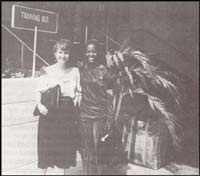
SOLIDARITY VISITS One of the highlights of my trip was traveling to the Mae Chan district of Chiang Rai province in the northeast of Thailand where we met with representatives both from the Department of Non-Formal Education and from the non-governmental Hill Area Development Foundation (HADF). I was impressed by the cooperation between government and non-government agencies. After a difficult 15 hour journey, we arrived in the Hill Area. We visited several Hill tribe villages and met with members of the Lisu, Akha and Lahu hill tribes, learning that the majority of community development work is focused on learning new agricultural techniques and the Thai language and culture. For these villagers, learning to read, speak and write in Thai is not only important in order to learn new crop growing techniques; it is also a criterion for obtaining Thai citizenship. Currently, most of these villagers are not considered Thai citizens by the government. The women in these villages are distinguished by their colourful dress and by their silence. But with the help of a Thai-speaker, some women did respond to our questions. They told us that they put in long days, rising at 5 a.m. to pound the rice, make meals, work in the fields, only to Shauna with Margaret Machila of Zambia. (UBC graduate and old friend) return to their homes to prepare the evening meal and put the children to sleep. While women often outnumbered the men at literacy classes, once married with children (an average of 8), they would no longer have time for such activities. It seems women the world over work a double day. Throughout our brief stay, we were treated as honoured guests, with special meals and an evening of song and dance during their full moon celebration. We left with a feeling of ambivalence about the work being done with these people: it was clear that on one hand the hill tribes suffered due to their marginal status as non-citizens of Thailand. Becoming Thai citizens would bring them services and allow them to have a voice in political decision making. On the other hand, there is a great risk that their culture and traditional languages will be eroded and lost. |
| Back | Contents | Next |